
We invest in fighting cancer
Our cancer researchers
In 2026 we're investing in six of the brightest and best early and emerging cancer researchers from across Australia.

Dr Sarah Boyle
Tackling breast cancer growth and metastasis by suppressing ROCK-regulated paracrine signalling
Centre for Cancer Biology, University of South Australia
The spread of breast cancer to other parts of the body - often referred to as metastasis - is the most common cause of cancer-related death in women.
Metastasis is aided by changes in the environment that surrounds and supports the breast cancer.
Dr Boyle has previously identified certain chemicals released from breast cancer cells as they grow. These chemicals cause changes in the surrounding normal breast cells that promote metastasis.
The goal of this project is to determine whether blocking these chemicals can help stop the spread of breast cancer.
Dr Boyle is funded by Can Too Foundation in partnership with Cancer Australia through the Priority-driven Collaborative Cancer Research Scheme (Grant ID: 2023/PCRS/0254).

Dr Vasilios Panagopoulos
Targeted inhibition of myeloperoxidase: a new therapeutic strategy to prevent multiple myeloma disease progression
South Australian Health and Medical Research Institute, University of AdelaideMultiple myeloma is an incurable blood cancer that is strongly influenced by the accumulation of inflammatory cells in the bone marrow of patients. As patients go through multiple rounds of treatment, the effectiveness of these therapies decreases and eventually, the cancer becomes resistant to all treatments and unfortunately patients succumb to their disease. Hence, there is an urgent need for new, well-tolerated treatments that can overcome this resistance and prevent relapses.
Dr Panagopoulos’ research focuses on developing a new treatment strategy to address this unmet clinical need. Dr Panagopoulos and his team have previously shown that myeloperoxidase (MPO), an enzyme released by inflammatory cells within the bone marrow, contributes to the progression of multiple myeloma. The goal of this project is to generate the crucial pre-clinical data required to support the development of a new MPO inhibitor, which could then be tested in clinical trials as a treatment for multiple myeloma.
For more information on Dr Panagopoulos’s project click here.
Dr Panagopoulos’ project is funded by the Can Too Foundation in partnership with Cancer Australia through the Priority-driven Collaborative Cancer Research Scheme (Grant ID: 2021451).

Dr Laura Moffitt
Challenging cancer leader cells: the pioneers of cancer spread
Hudson Institute of Medical Research
Ovarian cancer is the deadliest cancer of the female reproductive system. Unfortunately, survival rates have not improved significantly in the last 30 years. The main treatments—surgery and chemotherapy—have limited effectiveness, and there are very few alternative options available for patients. Most deaths from ovarian cancer are due to the spread of the disease (metastasis) and the cancer becoming resistant to chemotherapy, resulting in less than a 30% survival rate when the cancer is diagnosed in its advanced stages.
Dr Moffitt and her team have identified a specialised group of ovarian cancer cells called ‘leader cells’. These cells are responsible for the aggressive spread of the cancer and its resistance to chemotherapy. In this project, Dr Moffitt aims to find new treatments targeting these leader cells. Genetic and protein data from leader cell-rich and leader cell-free samples will be analysed using a cutting-edge collaborative method. From this, potential drug targets that specifically affect leader cells' behaviour, including their ability to move, invade surrounding tissue, and resist treatments, will be identified.
By understanding how leader cells work, new treatment strategies can be developed to slow the spread of ovarian cancer and improve the effectiveness of current therapies. The findings from this research will lay the groundwork for future translational studies focused on targeting leader cells as the key drivers of ovarian cancer progression, aiming to improve survival rates and provide better treatments for patients with advanced disease.
This project is supported by the CanToo Early & Emerging Cancer Research Program, an initiative of Can Too Foundation and Hudson Institute of Medical Research.
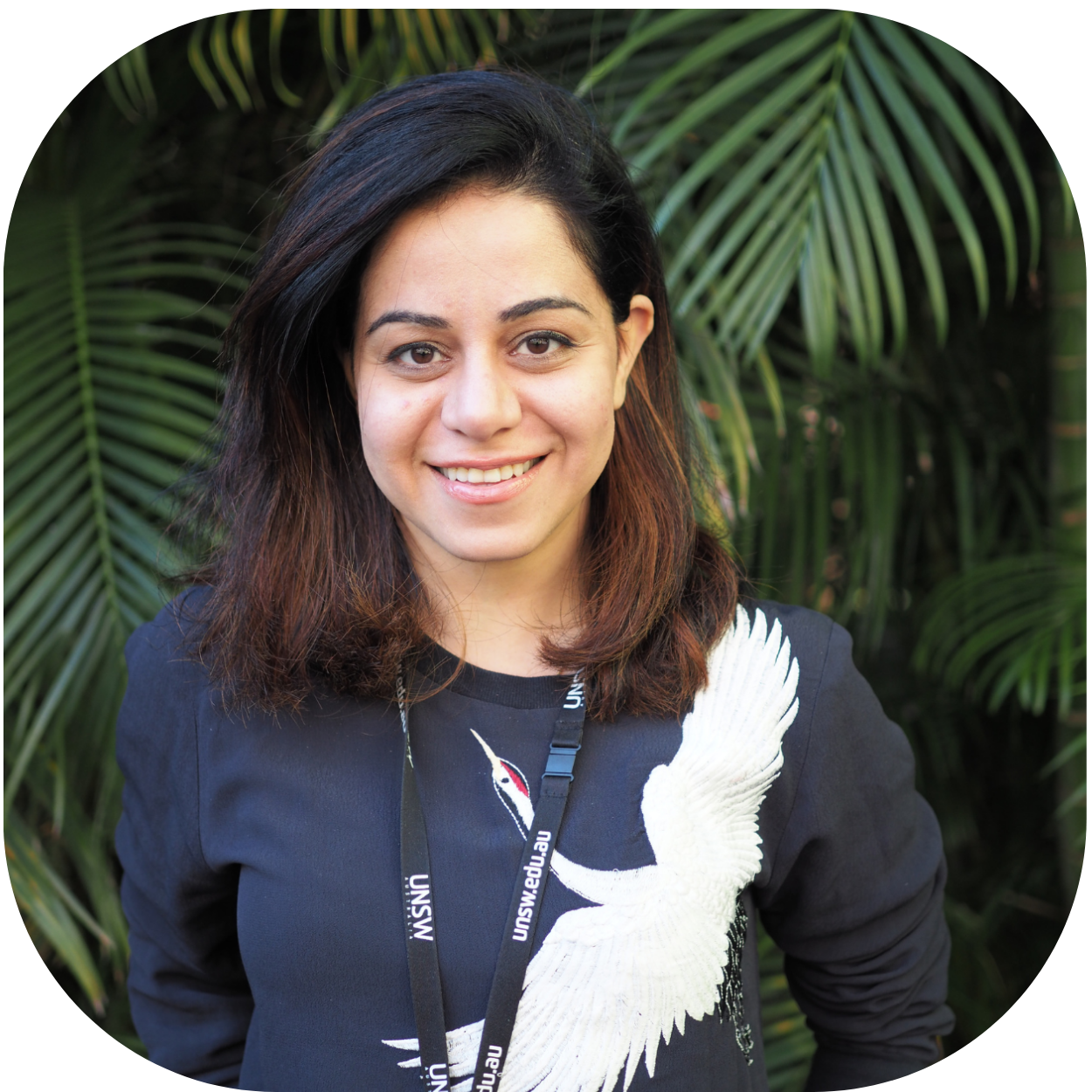
Dr Narges Bayat
Advancing leukaemia care: a new imaging tool for early detection and treatment monitoring
Children's Cancer Institute, University of New South Wales
Acute lymphoblastic leukaemia, a type of blood cancer, is the most common childhood cancer.
Early detection of relapse is crucial for improved survival.
Small amounts of residual disease in the bone marrow are the best indicator of relapse and poor outcomes as patients undergo treatment. However, monitoring residual disease currently involves repeated, highly invasive bone marrow biopsies to assess treatment response.
Dr Bayat’s project aims to develop an innovative, minimally invasive tool for detecting residual disease through imaging. This tool will integrate advanced magnetic particle imaging with targeted nanoparticles to visualise individual cancer cells in the bone marrow.
This minimally invasive approach could transform how treatment effectiveness is monitored. Dr Bayat hopes this pre-clinical imaging tool will enable the tracking of residual cancer cells for more accurate and earlier detection and accelerate the development of more effective treatments for high-risk leukaemia.
This project is supported by the CanToo Emerging Research Leader Program, an initiative of Can Too Foundation and Children’s Cancer Institute.
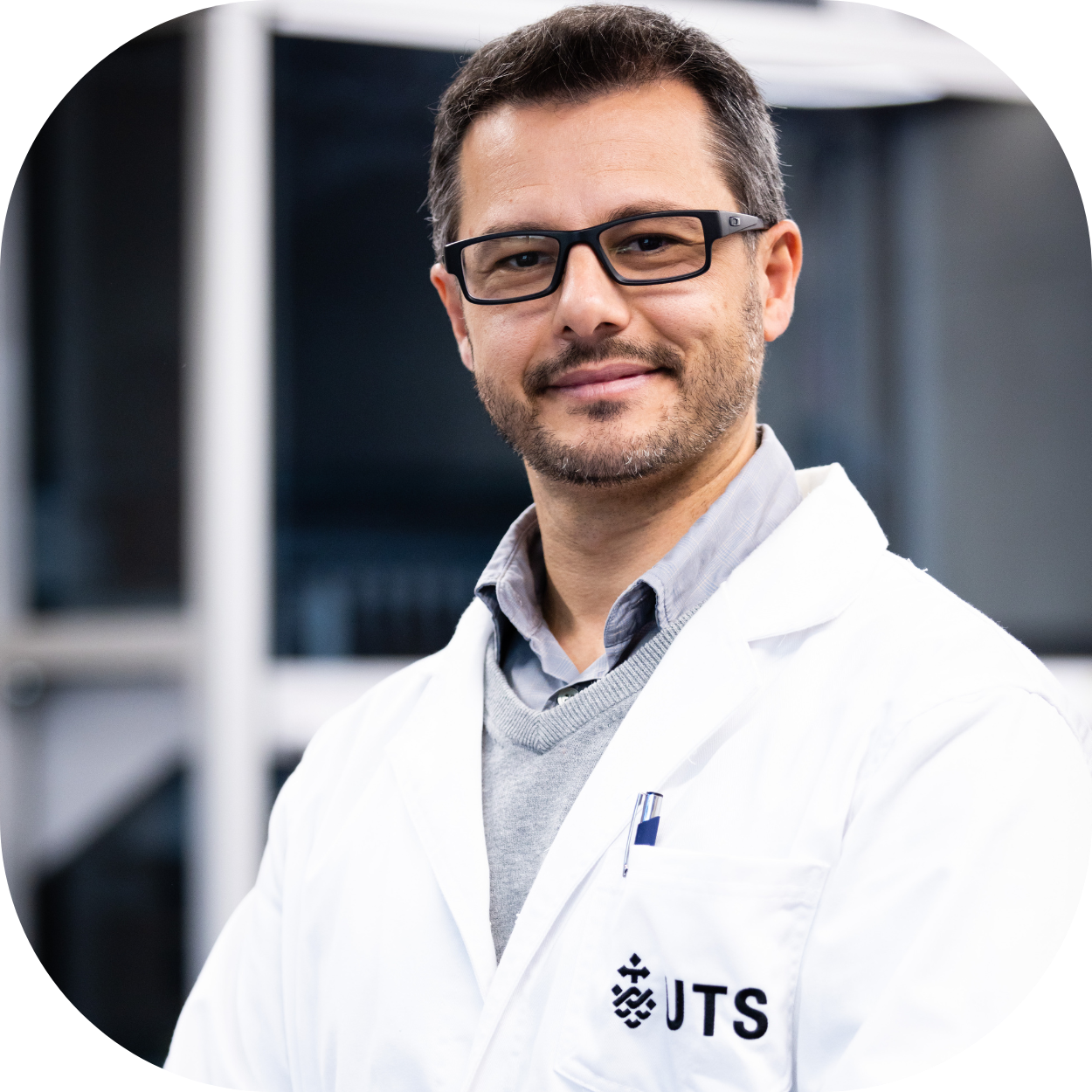
Prof David Gallego Ortega
Developing an immunotherapy for triple-negative breast cancer
University of Technology SydneyTriple negative breast cancer is a type of breast cancer that doesn’t have any of the three receptors commonly found on breast cancer cells. This type of cancer is aggressive and fast-growing, and new and effective therapies are urgently needed.
Prof Gallego Ortega’s project aims to develop biomarkers for specific cells, known as myeloid-derived suppressor cells (MDSC) which reduce the body’s normal immune response to breast cancer, to detect the early spread of triple-negative breast cancer cells to other parts of the body. The project also aims to refine a treatment prototype that specifically targets MDSCs, which could pave the way for a new generation of immune therapies for triple-negative breast cancer.
Prof Gallego Ortega’s research project is funded by the Can Too Foundation in partnership with Cancer Council NSW through the Cancer Council NSW Project Grant Scheme (Grant ID: RG-23-09 [2023-2026]).

Prof David Ziegler
Testing a new dual treatment for aggressive childhood brain cancers
Children's Cancer Institute, University of New South Wales
In Australia, brain cancer is the leading cause of death from disease in children. Tragically, many children with brain cancer pass away within a few years of diagnosis.
In previous research, Prof Ziegler has shown that a specific molecular pathway is overactive in aggressive childhood brain cancer and may be a promising target for treatment. In this project, Prof Ziegler will use samples from the most aggressive childhood brain tumours to determine whether a new drug combination can switch off this overactive molecular pathway and stop cancer progression. He will also assess the effectiveness of this drug combination alongside chemotherapy and other current treatments to see if this improves their success.
Prof Ziegler hopes this new combination treatment strategy will lead to a clinical trial for children with aggressive and otherwise incurable brain cancer. For more information on Prof Ziegler’s project click here.
Prof Ziegler’s project is funded by Can Too Foundation, in partnership with Cancer Council NSW, through the Cancer Council NSW Project Grant Scheme (Grant ID: RG-22-08 [2021-2026).
We have supported over 140 early and emerging cancer researchers in Australia since 2005, with many of them now recognised as leaders in their field
Holly Holliday
Vasilios (Bill) Panagopolous
Joshua Tobin
Yolanda Colino-Sanguino
Simone Park
David Gallego-Ortega
Arutha Kulasinghe
Zeyad Nassar
Dongmei Tong
Shuai Li
Paul Timpson
Belamy Cheung
David Ziegler
James Wilmott
Justin Wong
Neil Watkins
Kelly Brooks
Carrie Van Der Weyden
Marlene Hao
Emmy Fleuren
Niantao Deng
Susan Rasmus
Fernando Guimaraes
Nathalie Bock
Tao Liu
Angelica Merlot
Rachel Thijssen
Zeyad Nassar
Vivian Kahl
Prahlad Raninga
George Sharbeen
Phoebe Phillips
James Wilmott
Tracy O'Mara
Nicholas Fletcher
Sumit Sahni
Jyotsna Batra
Fernando Guimaraes
Sarah Hancock
Yuan Cao
Rochelle D'Souza
Philip Hansbro
Camille Guillerey
Angelica Merlot
Lauren Aoude
Yuan Cao
Dominik Beck
Najoua Lalaoui
Tao Liu
Su Yin Lim
Gillian Gould
Shweta Tikoo
Justin Wong
Susan Ramus
Neil Watkins
Natalia Castano-Roiguez
Sophie Broughton
Bree Foley
Clare Slaney
Camille Guillerey
Susan Woods
Laura Bray
Zakalina Kovacevic
Stephen Mattarollo
Patsy Soon
Yu Zheng
Clare Slaney
Vivien Chen
Luc Furic
Michael Doran
Kara Perrow
Phoebe Phillips
Yuanyuan Ge
Xue Qin Yu
Hui K. Gan
Jason Waithman
Carolyn McNees
Rachael Rutkowski
Katie Ashton
Jill Larsen
Nikola Bowden
Daniel Speidel
Jason Dowling
Patsy Soon
Phillippa Taberlay
Patricia Nunez da Costa
Rose Boutros
Jason Waithman
Shusuke Toden
Jessica Holien
Lisa Mielke
Christopher Scarlett
David Zielger
Gough Au
Paul Beavis
Aian Wiegmans
Viive Howell
Helen Pearson
Christine Napier
Ana Janic
Fatima Valdes-Mora
Megan Bywater
Steven Lane
Guy Tsafnat
Khatira Anwari
Donia Moujalled
Andy Hsu
Heidi Hilton
Hilda Pickett
Christine Napier
Antonia Pritchard
Jacqueline Donoghue
Jennifer Stone
Daniel Anews
Maté Biro
Liesel Fitzgerald
Justin Lees
Liz Caldon
Nicole Haynes
Antonia Pritchard
Emma Baker
Akira Nguyen
Xiaomeng Zhang
Kerrilyn Diener
Richard Payne
Paul Neilsen
David Gallego-Ortega
Loretta Lau
Kenneth Micklethwaite
Smitha Georgy
Hamish Campbell
Caroline Ford
Laurent Pangon
Aparna Jayachanan
Randy Suryadinata
Jeremy Henson
Eleanor Ager
Viive Howell
Shane Thomas
Megan Fabbro
Vanessa Bonazzi
Jordane Malaterre
Wayne Thomas
Susan Fanayan
Graham Ball
Matthew Naylor
Ivan Ivetac
Maurice Eisenbruch
Toby Hulf
Kirsten Hammond
Ronald Sluyter
Ulla Simanainen
Hugh Morgan
Tao Liu
Megan Hitchins


