Does purpose add something more?
We usually talk about physical activity in terms of what we hope to get from it. We want to become fitter. Run further. Learn to ocean swim. Take on something that once seemed impossible. Build confidence. Look after our health.
Those are powerful reasons to move. But what changes when the challenge isn't only about what we can achieve for ourselves? What happens when every training session is also connected to something beyond the finish line?
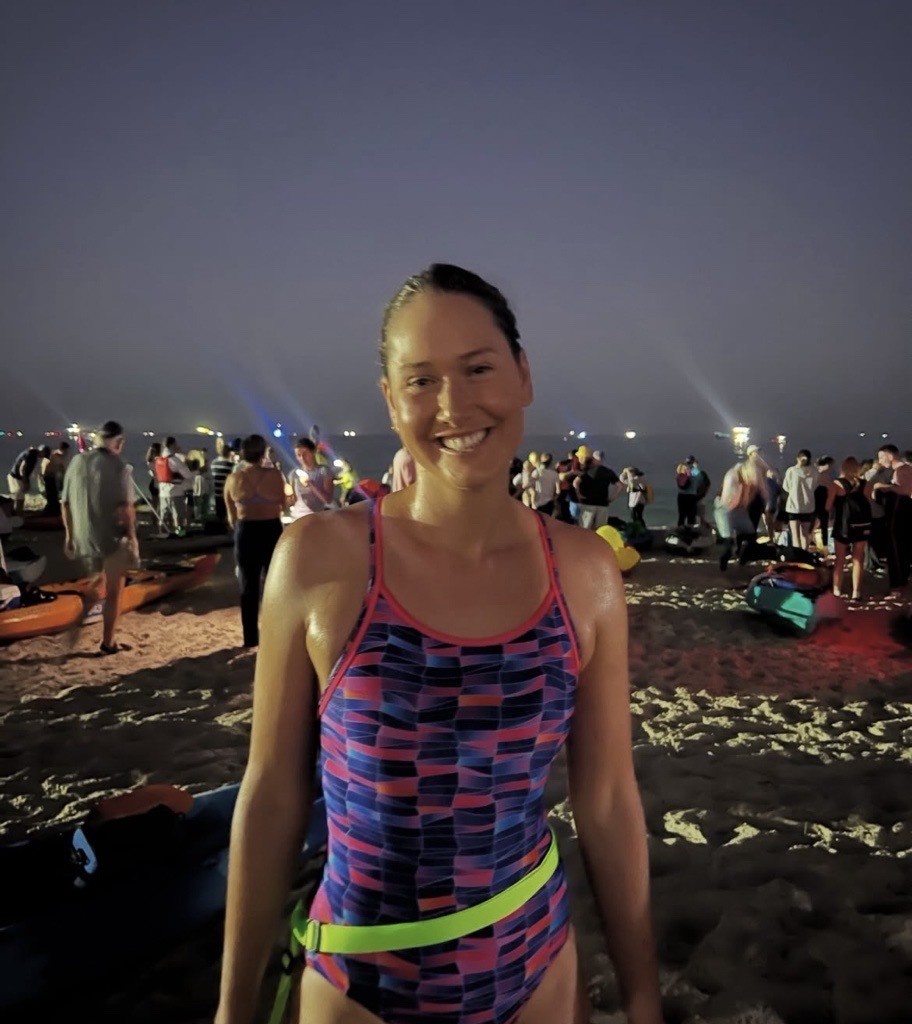
For CanToo participants, that question is built into the challenge. Alongside pursuing a physical goal, participants raise funds to support cancer research. One challenge can therefore have two destinations: a personal goal and a greater cause.
When movement meets contribution
Emerging research gives us an interesting way of thinking about this combination. A 2026 study examined GoodGym1, a UK organisation combining running, walking and cycling with volunteering. Researchers analysed 3,590 observations from 2,856 people and found participation was associated with lower loneliness and mental distress, alongside stronger feelings of belonging, connectedness and community trust. The researchers caution that some of the proposed pathways are correlational.
GoodGym isn't CanToo. Volunteering directly in a community is different from fundraising to support cancer research, and the study cannot tell us that CanToo participants will experience the same outcomes. But it raises an intriguing question: Does physical activity feel different when our effort contributes to something beyond ourselves?
When a physical challenge becomes a fundraising movement
There is another dimension to combining physical activity with purpose: one person taking on a challenge can invite an entire network to become part of it.
Across Australia and New Zealand, peer-to-peer fundraising events generated almost $227 million in 2025, up 6 per cent on the previous year2. Physical fundraising events also recorded their strongest year since before the pandemic.
Individual events show what that can mean at participant level. Western Australia’s Up All Night challenge asks people to walk 21km or 42km overnight in support of Ronald McDonald House Charities WA. In a recent campaign3, 1,276 registrations generated more than $1.57 million, with the average individual raising $1,241.
The activities and causes may differ, but the model has something important in common with CanToo. The physical challenge gives people a reason to tell a story, invite others into the journey and turn personal effort into collective impact. A participant may be doing the kilometres - but friends, family members, colleagues and donors can all become part of what those kilometres make possible.
When the challenge becomes personal
For some CanToo-ers, cancer is not an abstract cause. It may be part of their own story, or the story of a parent, partner, sibling, colleague or friend. That can give an early-morning training session a meaning that isn't visible in a pace chart or distance logged.
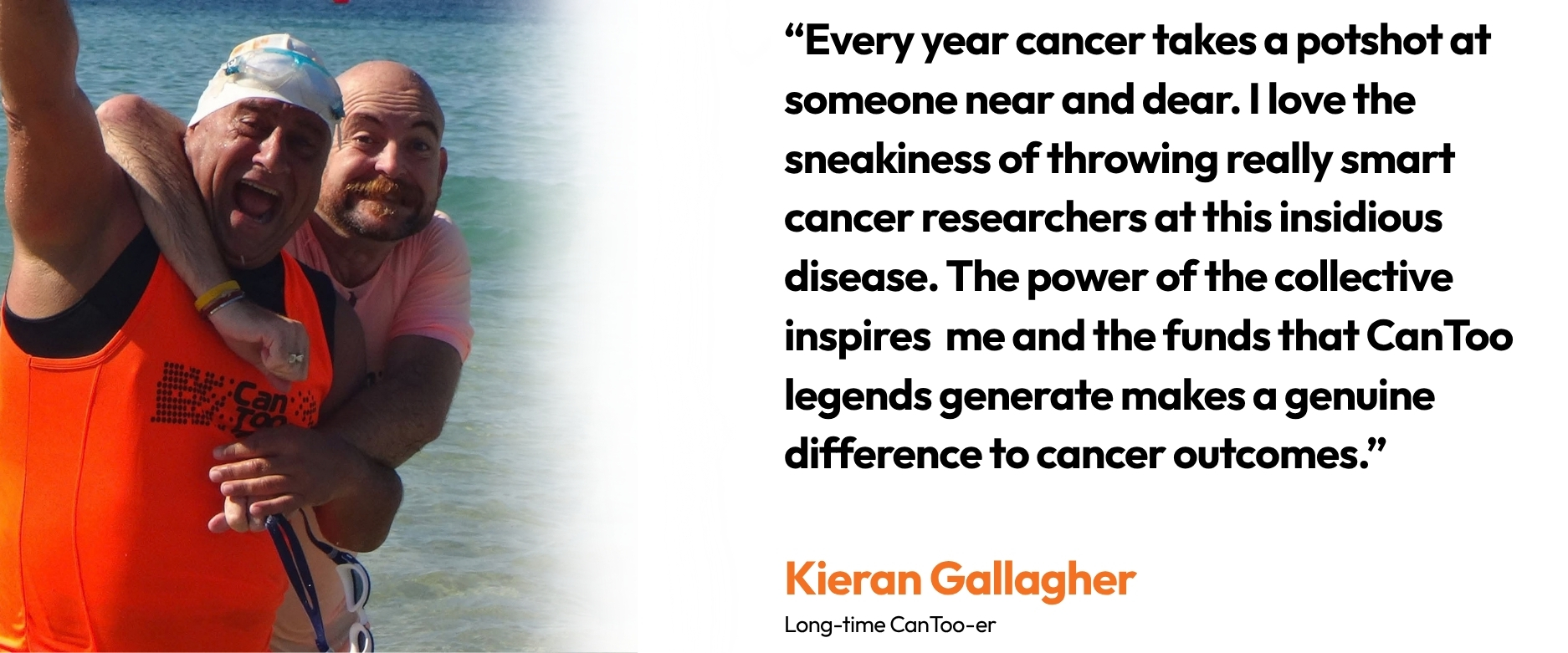
A difficult session may still be difficult. Purpose doesn't magically make the kilometres shorter. But it can change what those kilometres represent. Instead of simply asking “What can I achieve?”, the challenge begins to carry another question: “What could my effort contribute?”
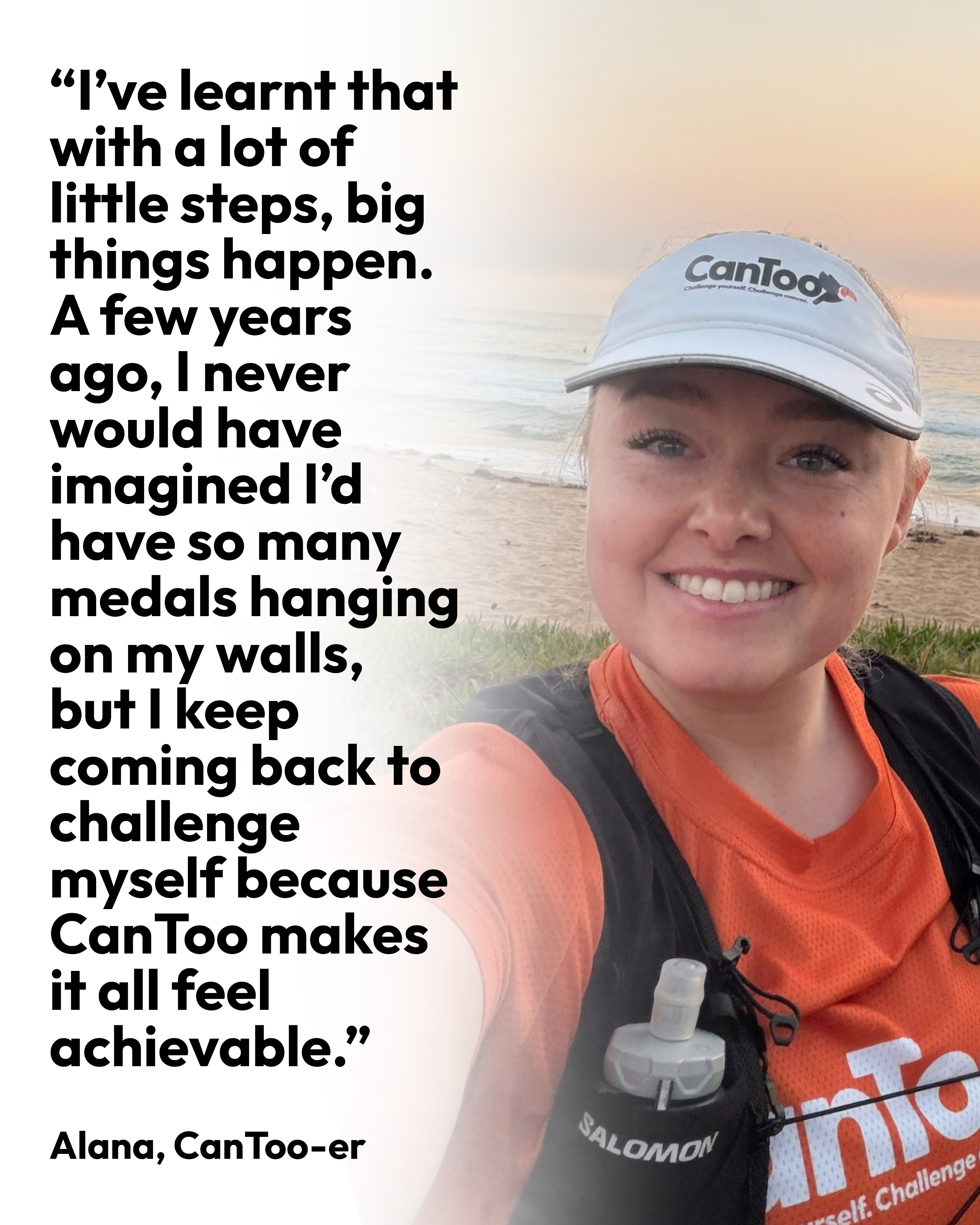
According to Alana, "The fundraising just makes the programs even more enjoyable, because I’m able to do what I enjoy while helping make a real difference."
Like many of us, Alana has experienced the heartbreak of losing loved ones to cancer, making her fundraising efforts all the more meaningful. Having lost both her dad and grandfather-in-law to the disease, she understands firsthand the impact cancer can have on individuals and families. "If there’s even one person that doesn’t have to be scared because of the results that come from the research we fund, then it’s all worth it," Alana says.
Where the effort goes
Since 2005, CanToo reports that more than 23,000 people have participated in its programs, raising over $36 million and helping fund 161 research projects.
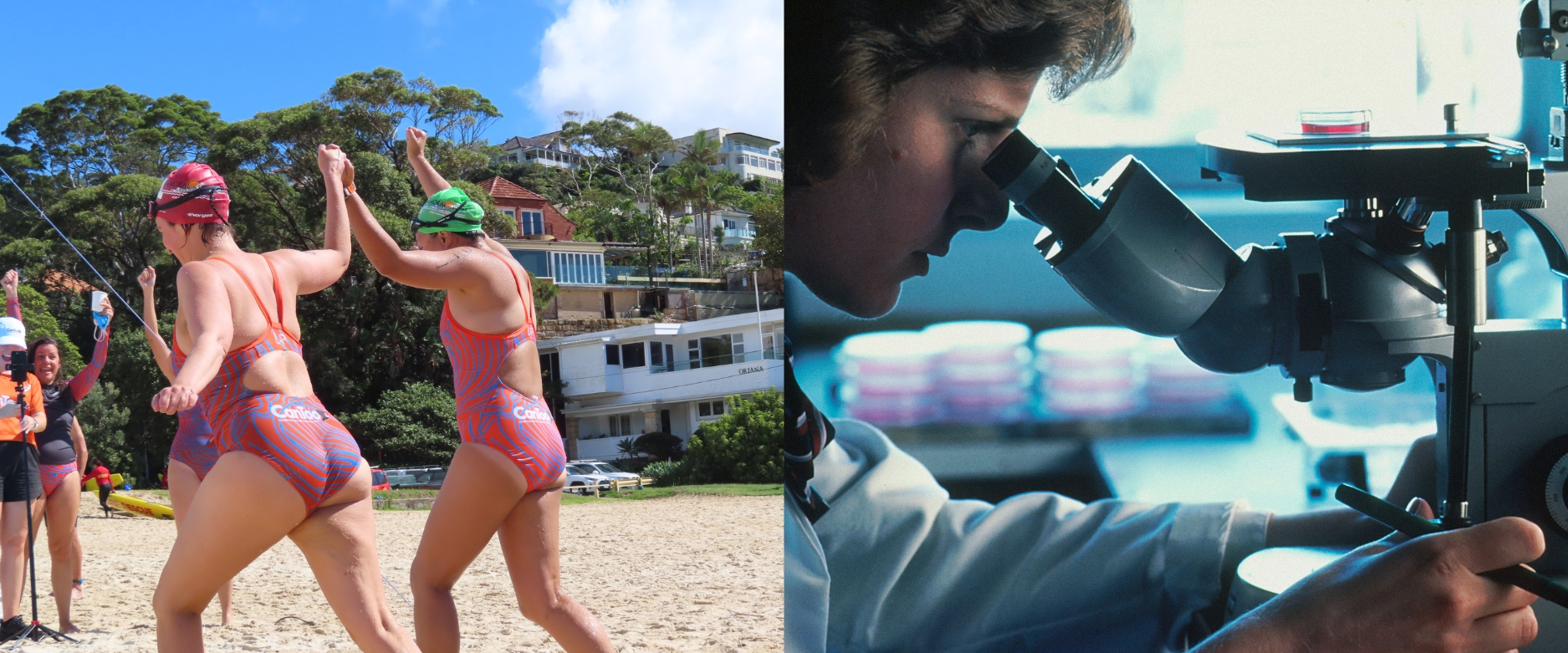
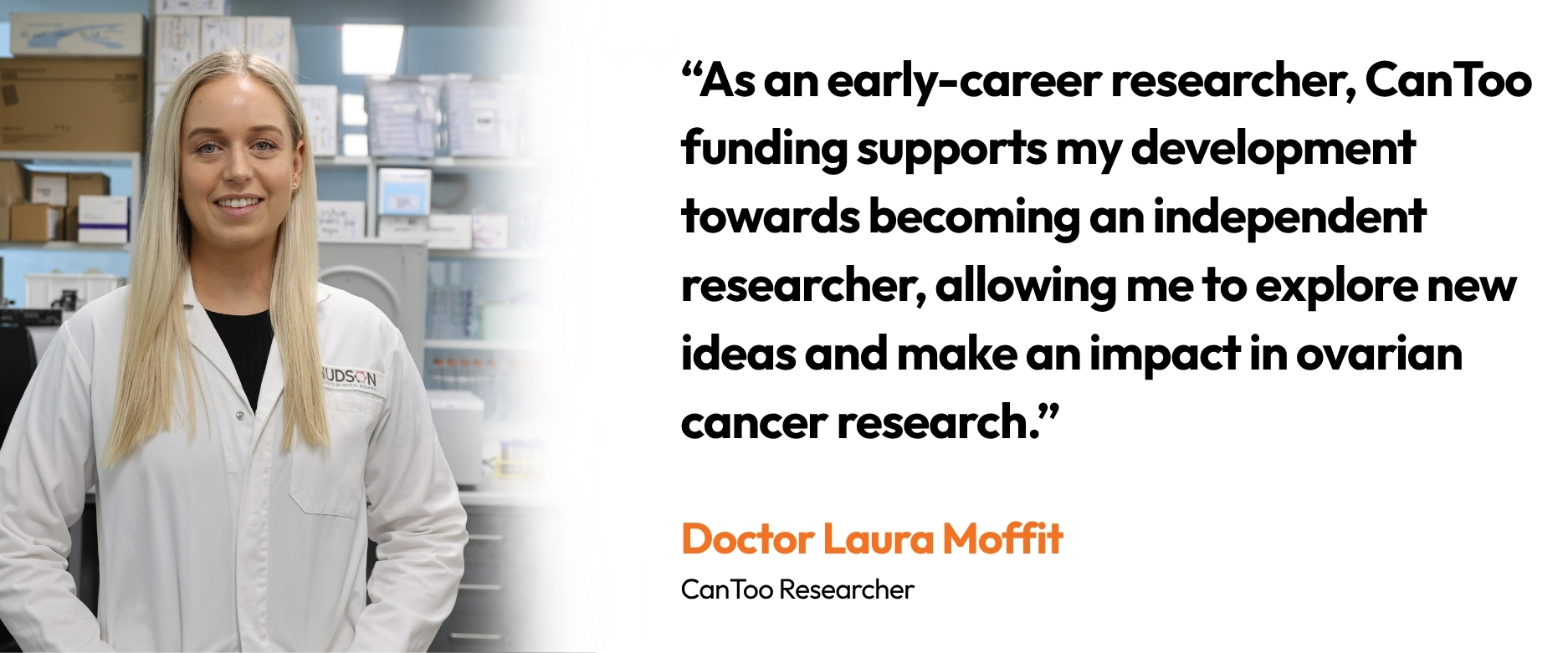
Behind those numbers are two very different kinds of challenge. Participants are getting up early, learning new skills, taking on longer distances and asking friends and family to support them. Researchers are asking difficult questions of their own: testing ideas, building evidence and looking for better ways to prevent, detect, treat and care for people affected by cancer. CanToo connects those two worlds.
More than the finish line
There is something powerful about achieving a physical goal you once thought might be beyond you. The finish line matters. So does the strength, skill and confidence developed along the way. But when a challenge has a purpose outside ourselves, its impact isn't measured only in kilometres, laps, times or medals.
There is also the knowledge that your effort has helped support work continuing long after the event is finished. Perhaps that is one of the distinctive things about combining physical activity with a cause.
You can challenge yourself.
You can do it alongside others.
And your challenge can help give Australian cancer researchers greater opportunity to take on theirs.
Choose a challenge for yourself and make it count for something more. Challenge yourself. Challenge cancer.